
A saver deposits $500 into a wallet after seeing an advertised DeFi rate that looks unusually high. That number sounds simple, but the path to actually earning it is not. Where does that rate come from, and does it stay steady or disappear after a promotional period? Many beginners deposit funds first and ask these questions only after something goes wrong. This guide follows the opposite order: starting with a small, simple route, checking exactly where the yield comes from, and testing withdrawal and risk before adding more money.
Before the First Deposit: Wallet and Network Setup
Getting ready before any money moves keeps the first deposit from turning into an unplanned lesson. A crypto wallet is an app that holds the keys needed to authorize transactions on a blockchain, the shared record-keeping system behind cryptocurrencies. Two setup choices matter most at this stage: which wallet to use and which network to use it on.
Choosing a self-custodial wallet
A self-custodial wallet is one where the private key, the password-like code that authorizes transactions, stays on the holder’s own device instead of a company’s server. Popular examples include MetaMask, Trust Wallet, and Coinbase Wallet, and setting one up is the first step covered in Crypto.com’s beginner DeFi guide. Losing the recovery phrase, a list of words that can restore the wallet, means losing access permanently, so it is normally written down and stored offline rather than saved as a screenshot.
Picking a low-fee network
Every transaction on a blockchain requires a small payment called gas, paid in that network’s native token. Gas costs vary by network and by how busy it is at the time, and Crypto.com’s guide notes that some networks are consistently cheaper than the original Ethereum network. The wallet displays an estimated fee before every transaction is confirmed, and checking that quote first avoids losing a meaningful share of a small test amount to fees alone.
Making a Small First Deposit
A stablecoin is a token designed to hold a steady value, usually pegged to the US dollar; USDC and USDT are the two most widely used examples. Beginner guides, including CoinGabbar’s 2025 beginner guide, consistently recommend starting with an amount small enough that a mistake or an unfamiliar step does not cause meaningful financial damage, rather than a fixed figure that fits every budget. The deposit itself is not the end goal here. It is a way to observe how the platform interface, the confirmation screens, and the balance display actually behave before larger amounts are involved.
A typical first deposit sequence:
- Fund the wallet with a small amount of a stablecoin.
- Connect the wallet to a chosen lending platform.
- Approve the platform’s smart contract, the self-executing code that holds and manages deposited funds.
- Confirm the deposit and note the displayed balance.
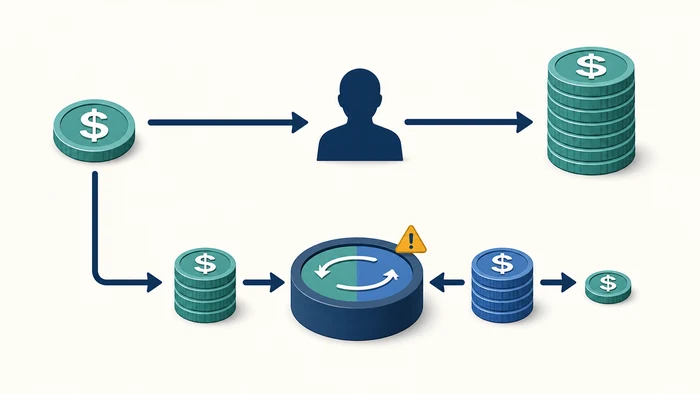
Where the Yield Actually Comes From
Before adding more money, it helps to know which of two sources is producing the advertised rate.
Interest paid by borrowers
On a lending protocol such as Aave, deposited stablecoins are made available for other users to borrow against collateral. Those borrowers pay interest, and depositors receive a share of it. According to Aave’s own documentation, the rate paid to depositors rises and falls with utilization, the percentage of deposited funds that are currently borrowed. When few people are borrowing a given asset, the rate paid to depositors is lower.
Fees paid by traders
On decentralized exchanges, depositors instead supply pairs of tokens so that traders can swap between them, earning a share of each swap’s trading fee. This method sits outside the beginner route described in this guide because it introduces a separate risk called impermanent loss, where the value of the two deposited tokens can shift relative to each other. That risk is not covered here and is worth separate research before attempting it.
The Withdrawal Test
A completed deposit is only half of the test. Withdrawing the same funds back to the original wallet confirms that the process works in both directions before larger amounts are committed. Withdrawal is not always immediate or unrestricted: available liquidity, protocol-specific terms, and network conditions can limit or delay it, as noted in Cryptovate’s beginner walkthrough, so the terms of a specific platform are worth checking before relying on a withdrawal timeline. Sending the small test amount back out, checking that the balance matches expectations minus any fees, and confirming the transaction on a blockchain explorer completes this checkpoint.
Risks to Check Before Depositing More
Every yield source described above carries a condition attached to it, not just a number.
- Smart contract risk: the code managing deposits can contain bugs or be exploited; using a platform whose contracts have been independently audited reduces but does not remove this risk.
- Rate volatility: an advertised rate is a snapshot, not a fixed promise, and can move up or down as borrowing demand changes.
- No deposit protection: unlike a bank account, most DeFi deposits carry no government-backed insurance if a protocol fails.
- Bridging and network risk: moving assets between blockchains adds an extra step where errors are harder to reverse.
An audit and a platform’s own risk disclosures do not remove any of the items above by themselves; they are inputs for judging them, worth reading before increasing a deposit size.
Direct Lending vs. an Aggregator: Choosing the First Route
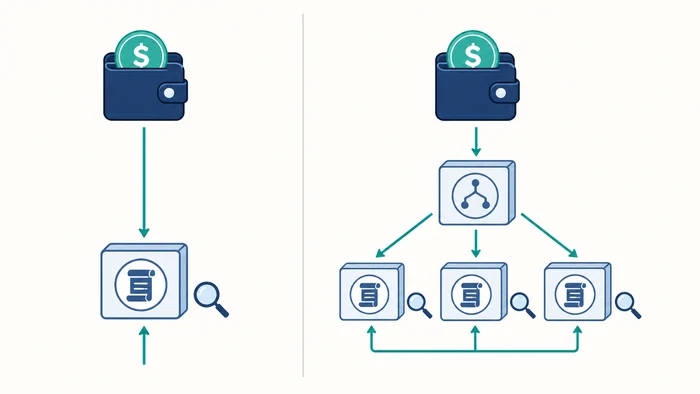
With preparation, a small deposit, a yield source, and a withdrawal test all completed, the remaining decision is which structure to use going forward: lending directly on one protocol, or using a platform that provides access to a selected route among several supported protocols.
Lending directly on one protocol
Connecting a wallet straight to a protocol such as Aave or Compound means interacting with exactly one set of contracts and one published rate. This route makes it straightforward to trace where a given yield number comes from, since there is only one source. It also means comparing and moving funds between protocols manually if a better rate becomes available elsewhere.
Using a platform that provides access to several protocols
After a first deposit and withdrawal have been tested, BenPay DeFi Earn offers a simpler next route: a self-custodial wallet can enter a selected multi-chain DeFi strategy in one place instead of opening and funding each protocol interface separately. The holder keeps control of the private key, and BenPay covers the gas for deposits and redemptions on BenFen. The strategy screen still matters: yield and redemption timing depend on the selected strategy, and the underlying protocol risk remains.
| Factor | Direct lending on one protocol | Aggregator providing access to a selected route among several protocols |
|---|---|---|
| Where the rate comes from | One named protocol, fully traceable | The supported protocol the platform provides access to through its selected route |
| Manual comparison needed | Yes, to find a better rate elsewhere | Reduced, since access is provided through one interface |
| Underlying risk | Limited to that one protocol’s contracts | The connected protocol’s contracts, plus the platform’s own contract |
| Best fit | Readers who want to verify each yield source directly | Readers who want fewer separate connections to set up |
The table does not show one column as superior to the other; it shows two different places where verification effort sits. A reader lending directly on Aave carries the confirmation work personally but generally finds it easier to identify the exact contract and rate in use. A reader using an aggregator hands that comparison step to the platform but adds the platform’s own contract to the list of things worth checking, alongside whichever protocol it provides access to. Neither option removes the rate volatility or the absence of deposit protection described earlier in this guide.
A Starting Checklist Before Increasing a Deposit
- Confirm the wallet’s recovery phrase is stored offline, not as a screenshot.
- Confirm the network chosen keeps gas costs to a small fraction of the deposit.
- Confirm the exact protocol or platform generating the yield and check its audit history.
- Complete one small withdrawal before adding a larger amount.
- Compare the direct-lending and aggregator routes above against available comparison time and risk tolerance before choosing one.
Frequently Asked Questions
Is DeFi yield the same as bank interest?
No. Bank interest usually comes with a fixed advertised rate for a set period, and deposit insurance may apply depending on the bank, the country, and the specific product. DeFi yield comes from borrower interest or trading fees, moves with market demand, and carries no deposit insurance.
How much money is needed to start?
There is no fixed figure; beginner guides generally point toward an amount small enough that a mistake does not cause meaningful financial damage. What counts as small depends on individual circumstances and comfort with the process.
Can the deposited amount be withdrawn at any time?
Not always without limits: liquidity, protocol-specific terms, and network conditions can restrict or delay a withdrawal. Testing a withdrawal with the small first deposit before committing more money confirms how a specific platform behaves rather than relying on general assumptions.
What is the difference between direct lending and an aggregator?
Direct lending connects a wallet to one protocol with one traceable rate. A managed DeFi route groups selected strategies in one interface, reducing the number of separate setup steps while leaving the holder responsible for choosing a strategy and understanding its terms.
Does a self-custodial wallet remove all risk?
No. Self-custody means private keys stay with the holder instead of a company, which removes one specific risk, a company controlling the funds, but does not remove smart contract risk, rate volatility, or the absence of deposit insurance described earlier in this guide.