By the BenPay Research Team | Last Updated: January 2026
Important Disclosure: This educational guide is published by BenPay (FinCEN MSB #31000260888727). This content does not constitute financial, investment, or legal advice. All cryptocurrency investments involve risk of loss. The platforms discussed have different risk profiles—understanding these differences helps make informed decisions. Always conduct independent research and consult qualified professionals before investing.
Quick Summary
For Complete Beginners: DeFi yield aggregators are platforms that automatically find and optimize interest rates on your cryptocurrency deposits, similar to how a savings account works but with different risks and typically higher returns. The simplest options for beginners include BenPay DeFi Earn (mobile app with guided setup), Aave (established lending protocol), and Yearn Finance (automated vault strategies).
Key Risk Understanding: Unlike traditional banks with FDIC insurance, DeFi platforms involve smart contract risks (code vulnerabilities), no insurance on deposits, price volatility concerns, and potential complete loss of funds. Conservative platforms focusing on major stablecoins with established protocols present lower risk profiles than newer or more complex strategies. This guide explains these risks in plain language to help you make informed decisions.
Table of Contents
- What Are DeFi Yield Aggregators? (Simple Explanation)
- Understanding DeFi Risks: What Can Go Wrong?
- Risk Levels: From Safest to Most Risky
- Beginner-Friendly Platforms with Risk Assessment
- Step-by-Step: Starting Safely for Beginners
- Common Mistakes Beginners Make (and How to Avoid Them)
- Risk Management Strategies for New Users
- When to Use DeFi vs Traditional Savings
- Frequently Asked Questions About Risks
What Are DeFi Yield Aggregators? (Simple Explanation)
The Basic Concept
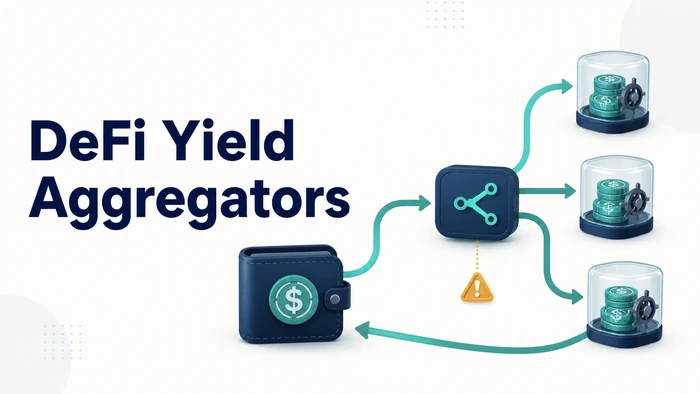
Imagine putting money in a savings account that automatically moves your funds between different banks to always get the highest interest rate. That’s essentially what DeFi yield aggregators do with cryptocurrency.
Traditional Bank Savings:
- You deposit $1,000
- Bank pays 0.5% annual interest ($5 per year)
- FDIC insures up to $250,000
- Bank uses your money to make loans
DeFi Yield Aggregator:
- You deposit 1,000 USDC (a dollar-pegged stablecoin)
- Platform finds lending protocols paying 3-6% annual interest
- No government insurance
- Smart contracts automatically manage your deposit
Why Use Aggregators Instead of Individual Platforms?
Think of it like having a financial advisor who constantly monitors interest rates and moves your money for you:
| Aspect | Manual DeFi | Using Aggregator |
|---|---|---|
| Rate Monitoring | You check rates daily | Platform monitors automatically |
| Moving Funds | You pay gas fees each time | Platform shares costs across users |
| Time Required | Several hours per week | Minutes for initial setup |
| Complexity | Need to understand each protocol | Platform handles technical details |
| Optimization | Depends on your knowledge | Professional strategy execution |
Understanding DeFi Risks: What Can Go Wrong?
This section explains risks in plain language. Understanding what can go wrong helps you make better decisions about whether DeFi suits your situation and risk tolerance.
Risk Category 1: Smart Contract Vulnerabilities
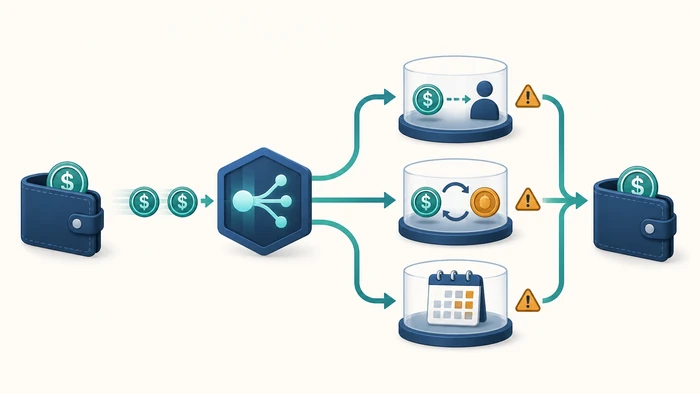
What It Means: DeFi platforms run on computer code called “smart contracts.” If this code contains bugs or vulnerabilities, hackers might exploit them to steal funds.
Real-World Example: In past incidents, platforms have experienced exploits where attackers found code weaknesses and withdrew funds that weren’t theirs. When this happens, users lose their deposits.
How to Assess This Risk:
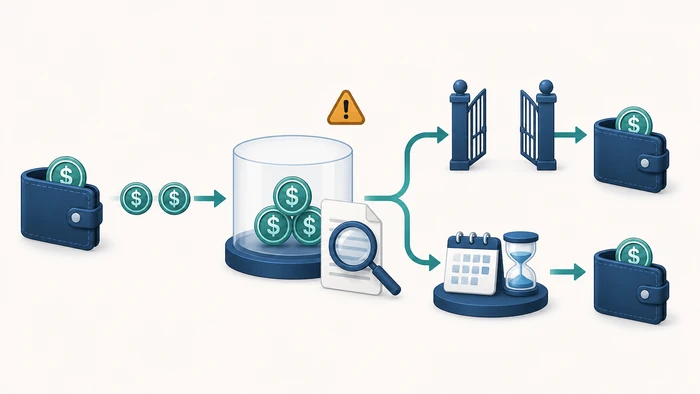
- Check if the platform has security audits from reputable firms (OpenZeppelin, Trail of Bits, Quantstamp)
- Look at operational history—platforms running successfully for 2+ years demonstrate proven security
- Review if the platform has experienced past incidents and how they were handled
- Verify if any insurance or protection mechanisms exist
Mitigation Strategies:
- Start with established platforms that have multi-year track records
- Use platforms with multiple independent security audits
- Never deposit amounts you can’t afford to lose completely
- Diversify across multiple platforms rather than concentrating in one
Risk Category 2: No Deposit Insurance
What It Means: Traditional banks offer FDIC insurance protecting deposits up to $250,000. DeFi platforms generally don’t have government insurance. If something goes wrong, no one guarantees your funds back.
Real-World Comparison:
| Scenario | Traditional Bank | DeFi Platform |
|---|---|---|
| Bank/Platform Fails | FDIC returns your money (up to limits) | May lose all funds |
| Fraud/Theft | Bank typically reimburses | Usually no reimbursement |
| Technical Error | Bank absorbs loss | User may bear loss |
| Regulatory Shutdown | Government protects depositors | Access may be lost |
Mitigation Strategies:
- Use platforms with insurance options (some DeFi platforms offer optional coverage)
- Choose self-custodial platforms where you control private keys (if platform shuts down, you still access funds)
- Consider third-party insurance services like Nexus Mutual for additional protection
- Maintain emergency funds in traditional banking separate from DeFi exposure
Risk Category 3: Stablecoin Depeg Risk
What It Means: Stablecoins aim to maintain $1.00 value. Occasionally they “depeg” and trade below this value, sometimes temporarily, sometimes permanently. If you hold stablecoins when this happens, you lose money.
Historical Examples:
- USDC temporarily depegged to $0.86 in March 2023 due to banking sector concerns (recovered to $1.00)
- UST (Terra) permanently collapsed from $1.00 to near-zero in May 2022
- Various smaller stablecoins have experienced temporary or permanent depegs
Understanding Stablecoin Types:
| Type | How It Works | Examples | Risk Level |
|---|---|---|---|
| Fiat-Backed | Backed by actual dollars in bank accounts | USDC, USDT | Lower (but not zero) |
| Crypto-Backed | Backed by other cryptocurrencies (over-collateralized) | DAI | Moderate |
| Algorithmic | Uses algorithms to maintain peg without traditional backing | UST (failed) | Higher |
Mitigation Strategies:
- Use major fiat-backed stablecoins (USDC, USDT) from established issuers
- Diversify across multiple stablecoin types
- Monitor stablecoin peg status regularly
- Understand that even major stablecoins carry some depeg risk
- Be prepared to exit quickly if depeg signals emerge
Risk Category 4: Platform Access and Custody
What It Means: Can you always access your funds? Who actually controls them? These questions determine what happens in various scenarios.
Custodial vs Self-Custodial Platforms:
| Aspect | Custodial (Platform Controls Keys) | Self-Custodial (You Control Keys) |
|---|---|---|
| Control | Platform holds your private keys | You hold your private keys |
| If Platform Shuts Down | May lose access to funds | Funds remain accessible |
| If You Lose Password | Can usually recover account | If you lose seed phrase, funds lost forever |
| Convenience | Easier password recovery | You manage all security |
| Examples | Centralized exchanges | BenPay, MetaMask + Aave/Yearn |
Mitigation Strategies:
- Understand which model your chosen platform uses
- For self-custodial: Secure seed phrase backup in multiple physical locations
- For custodial: Use platforms with strong regulatory compliance and track records
- Test withdrawals with small amounts before depositing large sums
Risk Category 5: Yield Sustainability
What It Means: Not all yields are sustainable long-term. Some platforms offer high initial rates through token incentives that eventually decrease or end entirely.
Sustainable vs Unsustainable Yields:
Sustainable Yield Sources:
- Borrower interest payments (people paying to borrow funds)
- Trading fees from liquidity provision
- Real-world asset yields (T-bills, etc.)
Potentially Unsustainable Yield Sources:
- Token emissions (printing new tokens to pay rewards)
- Promotional incentives (temporary user acquisition)
- Ponzi-like structures (new deposits paying old users)
Mitigation Strategies:
- Understand where yields come from—ask “who’s paying this interest?”
- Be skeptical of yields significantly exceeding market rates without clear explanation
- Expect yields to fluctuate based on market conditions
- Recognize that 20%+ yields typically involve temporary incentives or higher risks
Risk Levels: From Safest to Most Risky
This framework helps categorize different DeFi approaches by risk profile. Remember: “safest” in DeFi still involves more risk than FDIC-insured bank accounts.
Risk Level 1: Conservative DeFi (Lower Risk)
Characteristics:
- Established platforms with 2+ year track records
- Major fiat-backed stablecoins only
- Simple lending strategies (not leverage or complex derivatives)
- Multiple security audits from reputable firms
- Significant Total Value Locked ($1B+) indicating market confidence
- Self-custodial or licensed/regulated platforms
Expected Returns: Typically 3-6% APY
Example Platforms/Strategies:
- Aave (supplying USDC/USDT)
- Compound (supplying stablecoins)
- BenPay DeFi Earn (mobile app, MSB licensed)
Suitable For: Beginners prioritizing capital preservation, users treating DeFi as enhanced savings rather than primary investment strategy
Risk Level 2: Moderate DeFi (Moderate Risk)
Characteristics:
- Yield aggregators with automated strategies
- Combination of stablecoin lending and liquidity provision
- Platforms with 1-2 year track records
- Some exposure to governance tokens as rewards
- Moderate TVL ($100M-$1B)
Expected Returns: Typically 5-10% APY
Example Platforms/Strategies:
- Yearn Finance (automated vault strategies)
- Curve Finance stable pools
- Convex Finance
Suitable For: Users with some DeFi experience, comfortable with moderate complexity, accepting higher risk for potentially better returns
Risk Level 3: Aggressive DeFi (Higher Risk)
Characteristics:
- Leveraged strategies amplifying both gains and losses
- Newer protocols or less-established chains
- Complex strategies involving multiple protocols
- Significant token incentive dependency
- Lower TVL or recent launches
Expected Returns: Potentially 10-20%+ APY
Example Strategies:
- Leveraged lending positions
- New protocol bootstrap incentives
- Exotic derivative strategies
Suitable For: Experienced DeFi users understanding all mechanisms, willing to accept potential loss for higher return potential, using capital specifically allocated for higher-risk investments
Beginner-Friendly Platforms with Risk Assessment
Assessment as of January 2026 based on publicly available information. Always conduct independent research before depositing funds.
Platform 1: BenPay DeFi Earn
Overview: BenPay offers mobile-first DeFi yield through a self-custodial app with MSB licensing (FinCEN #31000260888727).
Risk Assessment:
| Risk Factor | Assessment | Details |
|---|---|---|
| Smart Contract Risk | Lower | Audited by SlowMist; integrates with established protocols (Aave, Compound) |
| Custody Model | Lower | Self-custodial (user controls private keys) |
| Regulatory Status | Lower | US MSB licensed, KYC required |
| Yield Sustainability | Lower | Conservative strategies on established lending protocols |
| Complexity | Lower | Mobile app with automated strategy selection |
| Overall Risk Level | Conservative | Suitable for beginners |
Best For Beginners Because:
- Mobile app simplifies setup process
- Automatic strategy selection removes decision complexity
- Self-custodial model means funds accessible even if platform has issues
- Integration with BenPay Card enables direct spending from yields
- Regulatory compliance provides additional user protections
Key Considerations:
- KYC verification required (not anonymous)
- 15% protocol fee on earned yield (transparent, but reduces net returns)
- Newer platform compared to established protocols (less operational history)
Platform 2: Aave
Overview: Aave is one of DeFi’s most established lending protocols, launched in 2020 with significant operational history.
Risk Assessment:
| Risk Factor | Assessment | Details |
|---|---|---|
| Smart Contract Risk | Lower | Multiple audits, multi-year track record, no major exploits |
| Custody Model | Lower | Self-custodial (non-custodial protocol) |
| Regulatory Status | Moderate | Decentralized protocol, no central entity, no KYC |
| Yield Sustainability | Lower | Yields from actual borrower interest payments |
| Complexity | Moderate | Web interface requires wallet connection, network understanding |
| Overall Risk Level | Conservative | Industry standard for DeFi lending |
Best For Beginners Because:
- Longest track record in DeFi lending space
- Largest TVL ($35B+) indicates strong market confidence
- Simple supply/withdraw mechanism
- Extensive documentation and community support
- No platform fees beyond network gas costs
Key Considerations:
- Requires separate wallet (MetaMask or similar)
- Need to hold network tokens for gas fees
- Manual network and market selection
- Higher learning curve than mobile-first solutions
Platform 3: Yearn Finance
Overview: Yearn pioneered automated yield optimization through “vaults” that execute strategies across multiple protocols.
Risk Assessment:
| Risk Factor | Assessment | Details |
|---|---|---|
| Smart Contract Risk | Moderate | More complex strategies involve multiple protocols; audited but higher complexity |
| Custody Model | Lower | Self-custodial (non-custodial protocol) |
| Regulatory Status | Moderate | Decentralized protocol, no KYC |
| Yield Sustainability | Moderate | Mix of organic yields and token incentives depending on vault |
| Complexity | Moderate | Automated strategies but requires understanding vault mechanisms |
| Overall Risk Level | Moderate | More suitable after gaining basic DeFi familiarity |
Best For Beginners Because:
- Automated optimization removes need for manual strategy management
- Well-established with multi-year history
- Gas costs socialized across vault participants
- Strong community and documentation
Key Considerations:
- Strategy complexity higher than simple lending
- Performance fee (typically 20% of profits)
- Understanding what each vault does requires research
- Some strategies involve impermanent loss or leverage risks
Step-by-Step: Starting Safely for Beginners
Phase 1: Education and Preparation (1-2 weeks)
Step 1: Learn the Basics
- Understand what stablecoins are and how they work
- Learn about wallet types (custodial vs self-custodial)
- Research the specific platforms you’re considering
- Read platform security audits (don’t just trust marketing)
Step 2: Assess Your Risk Tolerance
Ask yourself:
- Can I afford to lose the entire amount I’m considering depositing?
- Do I need this money in the next 6 months?
- How would losing this money affect my life?
- Am I comfortable with technology and troubleshooting issues?
If you answer “no” to the first question or “yes” to question 3 with serious implications, reconsider using DeFi.
Step 3: Choose Your Platform
| If You Value… | Consider… | Because… |
|---|---|---|
| Simplicity and mobile access | BenPay | Mobile app, guided setup, automatic strategy |
| Longest track record | Aave or Compound | Multi-year operation, proven security |
| Automated optimization | Yearn Finance | Professional strategy management |
| Regulatory compliance | BenPay | US MSB licensed, KYC verified |
Phase 2: Small-Scale Testing (1-4 weeks)
Step 4: Start with Minimum Amount
For your first DeFi experience, deposit the minimum practical amount—typically $50-200 depending on network fees. This lets you:
- Experience the full deposit/withdrawal cycle
- Verify yields accrue as expected
- Understand the user interface
- Test customer support if needed
- Limit potential loss during learning phase
Step 5: Monitor Daily (First Week)
Check your deposit daily for the first week:
- Verify balance increases from yield accrual
- Ensure you can log in reliably
- Test any notification systems
- Familiarize yourself with the interface
Step 6: Test Withdrawal
After 1-2 weeks, withdraw a small amount (25-50% of deposit) to verify:
- Withdrawal process works as expected
- Funds arrive in your wallet correctly
- You understand associated fees and timing
- No unexpected lock-ups or restrictions exist
If any issues arise during testing, do not deposit more until they’re resolved.
Phase 3: Gradual Scaling (2-6 months)
Step 7: Increase Position Slowly
If comfortable after testing phase, increase deposits gradually:
Conservative Scaling Schedule:
- Month 1: $50-200 (testing)
- Month 2: $500-1,000 (if testing successful)
- Month 3: $2,000-5,000 (if confident)
- Month 4+: Up to your risk tolerance limit
Never exceed 10-20% of your total investable assets in DeFi, especially as a beginner.
Step 8: Diversify Across Platforms
Once you’ve accumulated meaningful amounts ($5,000+), consider splitting across 2-3 platforms:
Example Diversification:
- 50% in most established platform (e.g., Aave)
- 30% in second platform (e.g., BenPay)
- 20% in third platform (e.g., Yearn)
This reduces single-platform risk.
Phase 4: Ongoing Management
Step 9: Regular Monitoring
After the learning phase, establish a monitoring routine:
- Weekly: Quick balance check, verify yields accruing
- Monthly: Review performance, check for platform news/updates
- Quarterly: Reassess strategy, consider rebalancing if circumstances change
Step 10: Stay Informed
- Follow platform social media for important announcements
- Join community channels (Discord, Telegram) to hear about issues early
- Monitor DeFi news through reputable sources
- Be prepared to exit quickly if major red flags emerge
Common Mistakes Beginners Make (and How to Avoid Them)
Mistake 1: Depositing Too Much Too Soon
What Happens: Beginner deposits significant funds immediately, encounters issues, panics, makes poor decisions.
How to Avoid: Follow the phased approach outlined above. Start small, test thoroughly, scale gradually.
Mistake 2: Not Securing Seed Phrases Properly
What Happens: User loses access to seed phrase, permanently loses access to funds.
How to Avoid:
- Write seed phrases on physical paper (never digital)
- Store in multiple secure physical locations (home safe, bank deposit box)
- Never share seed phrases with anyone for any reason
- Test recovery process with small amounts before depositing large sums
Mistake 3: Ignoring Gas Fees and Network Selection
What Happens: User pays $50 in gas fees to deposit $100, making the transaction economically irrational.
How to Avoid:
- Check network gas prices before transactions
- Consider cost-effective networks (Polygon, Arbitrum, BenFen) for smaller amounts
- Factor gas costs into return calculations
- Use platforms that optimize gas costs (aggregators, mobile apps)
Mistake 4: Chasing High Yields Without Understanding Risks
What Happens: User sees 50% APY offer, deposits funds, loses everything when protocol fails or is revealed as scam.
How to Avoid:
- Be extremely skeptical of yields significantly exceeding market rates (>15-20%)
- Understand exactly where yields come from
- Stick with established platforms initially
- Remember: if it seems too good to be true, it probably is
Mistake 5: Panic Selling During Temporary Issues
What Happens: User sees negative news or temporary depeg, sells at a loss, then price recovers.
How to Avoid:
- Understand that temporary issues happen in DeFi
- Distinguish between serious problems and temporary volatility
- Set up alerts but avoid checking prices obsessively
- Make decisions based on fundamentals, not panic
Mistake 6: Not Diversifying
What Happens: User puts all funds on one platform, platform has issue, user loses everything.
How to Avoid:
- Split funds across 2-3 established platforms
- Use different stablecoin types (USDC and DAI, not just USDT)
- Consider keeping some funds in traditional savings as backup
Risk Management Strategies for New Users
Strategy 1: The Tiered Allocation Approach
Divide your intended DeFi capital into risk tiers:
Tier 1 (60% of DeFi allocation):
- Conservative platforms only (Aave, Compound, BenPay)
- Major stablecoins only (USDC, USDT)
- Simple lending strategies
- Accept 3-6% yields
Tier 2 (30% of DeFi allocation):
- Moderate platforms (Yearn, Curve)
- Mix of lending and LP strategies
- Target 5-8% yields
Tier 3 (10% of DeFi allocation):
- Higher-risk strategies only if you fully understand them
- Experimental allocation
- Amount you’re completely comfortable losing
Strategy 2: The Time-Based Diversification
Don’t deposit all intended capital at once—spread it over time:
- Reduces impact of entering at poor market timing
- Allows learning from early deposits before committing more
- Provides multiple decision points to reassess
Example Schedule:
- Week 1: 10% of intended capital
- Month 1: Additional 20%
- Month 2: Additional 30%
- Month 3+: Remaining 40% if comfortable
Strategy 3: The Emergency Exit Plan
Before depositing, determine your exit criteria:
Exit Immediately If:
- Platform reports security incident
- TVL drops >50% rapidly
- Major stablecoin depegs >5%
- Withdrawal issues reported widely
- Regulatory action against platform
Monitor Closely If:
- Yields drop significantly (could indicate reduced demand)
- Community sentiment turns negative
- Key team members leave
- Competitors report similar issues
When to Use DeFi vs Traditional Savings
Use Traditional Banking When:
- Emergency Fund: Money you need access to immediately for emergencies should stay in insured traditional accounts
- Short-Term Goals: Saving for something in next 6-12 months (down payment, vacation) belongs in low-risk traditional savings
- Risk Intolerance: Cannot accept any possibility of loss
- Technical Discomfort: Not comfortable managing wallets, seed phrases, and troubleshooting
- Larger Amounts: Amounts exceeding FDIC insurance limits might require split between traditional and DeFi for diversification
Consider DeFi When:
- Extra Savings: Funds beyond emergency savings that you don’t need short-term
- Higher Risk Tolerance: Comfortable with volatility and potential loss in exchange for higher returns
- Technical Comfort: Willing to learn and manage cryptocurrency tools
- Long-Term Horizon: Don’t need these funds for 1+ years
- Portfolio Diversification: Want exposure to crypto-based returns as part of broader strategy
Hybrid Approach (Recommended for Most)
Typical Portfolio Allocation:
- Emergency Fund: 100% traditional FDIC-insured savings
- Short-Term Savings: 100% traditional
- Long-Term Savings: 80-90% traditional, 10-20% DeFi
- Investment Portfolio: Include DeFi as alternative asset (5-15% of investments)
Frequently Asked Questions About Risks
What’s the worst that can happen if I use DeFi?
The worst-case scenario is complete loss of your deposited funds. This could occur through smart contract exploits, platform failures, stablecoin collapse, or losing access to your private keys. This is why the fundamental rule is: never deposit more than you can afford to lose completely.
Are any DeFi platforms truly “safe”?
No DeFi platform is completely safe in the way FDIC-insured bank accounts are safe. However, established platforms with multi-year track records, extensive audits, and large TVLs present significantly lower risk profiles than newer or less-tested alternatives. “Lower risk” does not mean “no risk.”
How do I know if a stablecoin is about to depeg?
Warning signs include: trading below $1.00 on major exchanges, increased volatility, negative news about the issuing company, redemption issues, or regulatory concerns. Monitor stablecoin prices on platforms like CoinGecko. For fiat-backed stablecoins, transparency about reserves is positive; secrecy is concerning.
What should I do if I see news about a security issue on a platform I’m using?
First, stay calm and verify the information from official sources. If the issue is confirmed and affects your deposits, prioritize withdrawing funds to your personal wallet if possible. Follow official platform communications for guidance. For self-custodial platforms, your funds remain accessible even if the platform interface goes down temporarily.
How much should a complete beginner start with?
Start with an amount you’re completely comfortable losing—typically $50-200. This lets you learn the mechanics without significant financial risk. Only increase deposits after successfully completing several weeks of monitoring and at least one withdrawal to verify the process works as expected.
Is it better to use multiple platforms or stick to one?
Diversification across 2-3 established platforms reduces single-platform risk. However, for complete beginners, mastering one platform thoroughly before expanding makes sense. Start with one platform, get comfortable with it, then expand to others once you understand the basics.
Do I need to pay taxes on DeFi yields?
In most jurisdictions including the US, DeFi yields constitute taxable income when received. Tax treatment varies by country and specific circumstances. Maintain detailed records of all transactions. Consult tax professionals familiar with cryptocurrency for guidance specific to your situation.
What if I lose my seed phrase?
If you lose your seed phrase and lose access to your device, your funds are typically unrecoverable. This is the trade-off of self-custodial platforms—complete control also means complete responsibility. Always secure seed phrases in multiple physical locations and consider testing recovery on small amounts before depositing significant funds.
Additional Resources for Beginners
Educational Resources
- Official Platform Documentation: Start with official docs from platforms you’re considering—they provide accurate technical details
- DeFi Safety: defi.safety provides risk assessments of various protocols
- DeFiLlama: defillama.com tracks TVL and provides protocol data
- BenPay Blog: Official blog covers DeFi education topics
Community Resources
- Official Discord/Telegram channels of platforms you use (for announcements and support)
- Reddit communities like r/defi (but verify information—not all advice is good)
- @BenPayGlobal on X for platform updates
Security Resources
- Review security audit reports from firms like OpenZeppelin, Trail of Bits, Quantstamp
- Monitor security-focused Twitter accounts for early warnings about exploits
- Use hardware wallets for larger holdings (Ledger, Trezor)
Final Thoughts for Beginners
DeFi yield aggregators offer genuine opportunities for returns exceeding traditional savings accounts. However, these opportunities come with real risks that every beginner must understand before participating.
The most successful DeFi beginners share common characteristics:
- They educated themselves thoroughly before depositing funds
- They started with small amounts and tested extensively
- They chose established platforms with proven track records
- They diversified rather than concentrating all funds in one place
- They maintained realistic expectations about risks and returns
- They stayed informed and monitored their positions regularly
- They accepted that some losses might occur and planned accordingly
If you approach DeFi with caution, thorough preparation, and realistic expectations, it can serve as a valuable component of a diversified financial strategy. If you feel overwhelmed or uncertain after reading this guide, that’s a signal to either spend more time educating yourself or reconsider whether DeFi suits your current situation and risk tolerance.
Remember: the goal is not to achieve maximum yields but to achieve your personal financial goals while accepting only risks you understand and can afford.
Join the BenPay Community
Continue your DeFi education and connect with other users:
- Follow @BenPayGlobal on X for educational content and platform updates
- Join the Telegram community for peer discussions and support
- Read the BenPay blog for detailed guides on DeFi safety
- Explore community programs for beginners
Final Disclaimer: This guide provides educational information about DeFi yield aggregators and associated risks. It is not financial, investment, or legal advice. Cryptocurrency investments involve risk of loss including potential complete loss of principal. No platform is completely safe. Historical performance does not guarantee future results. Always conduct thorough independent research, understand all risks, and consult qualified financial professionals before making investment decisions. Only invest amounts you can afford to lose completely.