
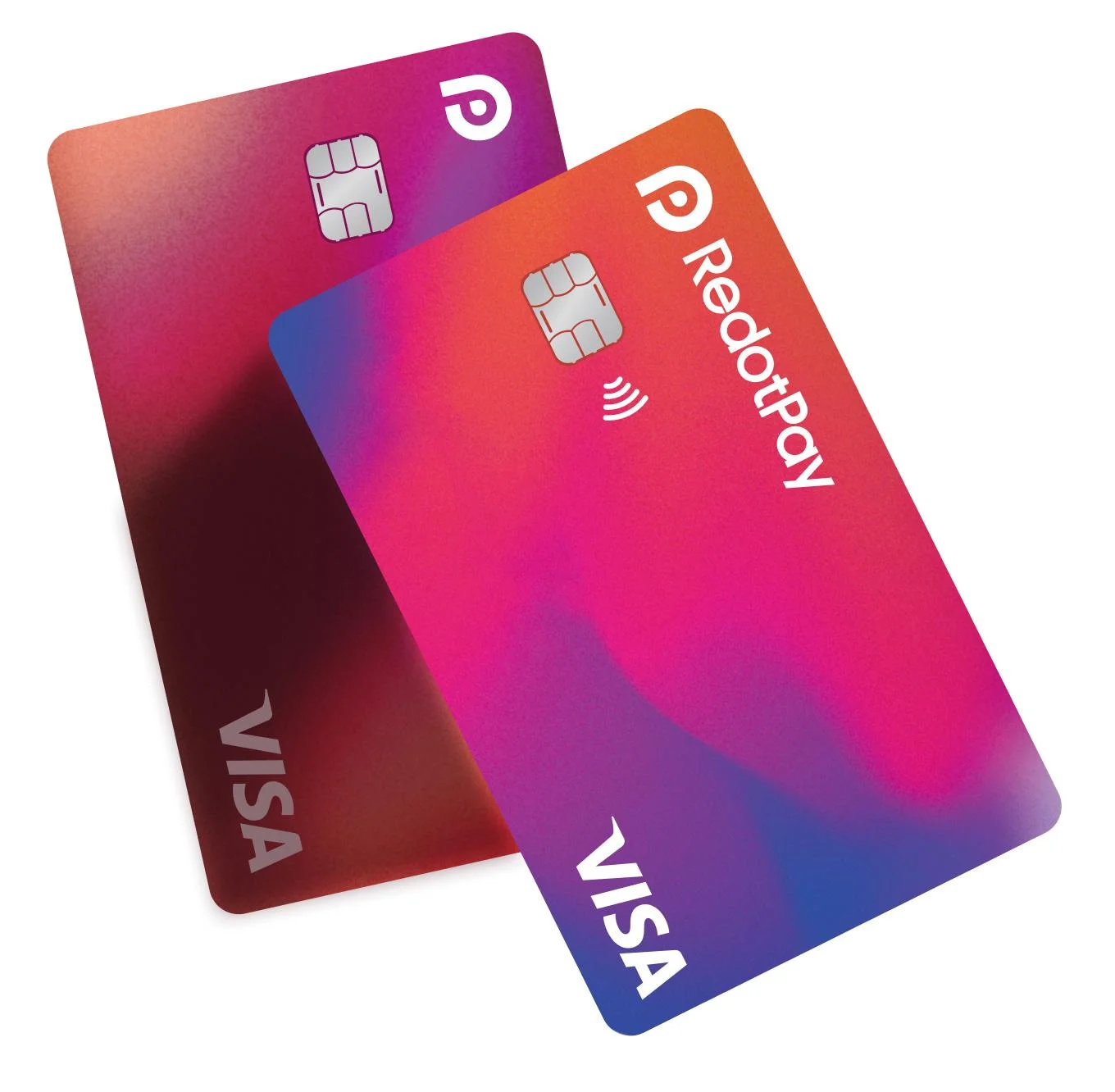
If you hold USDT or other stablecoins and want to spend them like regular money — at Amazon, Uber, or a coffee shop overseas — a crypto debit card is probably the most direct solution. RedotPay is one of the better-known options in this space. In this guide, we’ll explain what RedotPay does, how crypto debit cards work in general, and compare different custody models so you can decide which card actually fits your needs.
What Is a Crypto Debit Card?
A crypto debit card lets you convert cryptocurrency into fiat currency at the point of sale. In practice, this means you load stablecoins (like USDT or USDC) onto the card, and when you tap or swipe at a merchant terminal, the card issuer settles the transaction in local fiat — the merchant never sees crypto.
Think of it like a prepaid travel card: you top up a balance in advance, and spend from that balance globally. The key difference is where that balance comes from — in this case, your crypto wallet instead of a bank account.
There are two broad types of crypto debit cards:
- Custodial cards (CEX cards): Issued by centralized exchanges like Binance, Crypto.com, or Bybit. Your funds sit in the exchange’s custody. Convenient, but you don’t control the private keys — if the exchange freezes your account, your card balance goes with it.
- Self-custodial cards (Web3 cards): Your crypto stays in a wallet you control until the moment you authorize a transaction. You hold the private keys or recovery phrase. The trade-off: slightly more setup responsibility, but no single entity can freeze your funds.
Understanding this distinction matters — it’s the single biggest factor in how “safe” your card actually is.
What Is RedotPay? How Does It Work?
RedotPay is a Hong Kong-based crypto payment platform that offers a virtual and physical Visa debit card. It allows users to load stablecoins (primarily USDT) and spend them at Visa-accepting merchants worldwide.
Here’s what RedotPay typically offers:
- Virtual and physical Visa card options
- Support for USDT top-up across multiple chains
- Apple Pay and Google Pay compatibility
- Global merchant acceptance via the Visa network
RedotPay has gained popularity partly because of its relatively low entry barrier and broad geographic availability. For users who simply want to “turn USDT into spending money,” it offers a straightforward path.
However, there are a few things worth understanding before you commit:
- Custody model: RedotPay operates with a custodial or semi-custodial structure. Once you top up your card, the funds are managed by the platform — not by you. This means your ability to access those funds depends on the platform remaining operational and your account staying in good standing.
- Regulatory status: RedotPay holds certain licenses, but the regulatory landscape for crypto cards is evolving rapidly. Users should verify current licensing status, especially if they’re in regions with strict financial regulations.
- Fee structure: Like most crypto cards, RedotPay charges top-up fees, transaction fees, and potential FX fees for non-USD spending. These can add up, especially for frequent cross-border transactions.
How to Choose a Crypto Debit Card: What Actually Matters
With dozens of crypto cards now on the market, the real question isn’t “which card is cheapest” — it’s “which card model fits how I actually use money.” Here are the factors that matter most:
1. Custody: Who Holds Your Funds?
This is the most important question. With a custodial card, you’re trusting a company to hold and release your money. With a self-custodial card, your crypto remains in your own wallet until you explicitly authorize a payment.
Why it matters: In 2022–2023, multiple centralized platforms (FTX, Celsius, etc.) froze user funds overnight. If your card balance was held on those platforms, it was gone. A self-custodial model avoids this specific risk — though it introduces other responsibilities, like securely backing up your recovery phrase.
2. Fee Transparency
Crypto card fees can be surprisingly complex. Look beyond the headline “0% top-up fee” and check the full picture: monthly fees, per-transaction fees, FX conversion fees, ATM withdrawal fees, and minimum top-up amounts.
3. Chain & Stablecoin Support
Some cards only accept USDT on one or two chains (e.g., Ethereum or Tron), which can mean high gas fees for top-ups. Better options support multi-chain deposits — allowing you to send USDT or USDC from whichever chain is cheapest at the time.
4. Payment Ecosystem Integration
Can you bind the card to Apple Pay, Google Pay, Alipay, or WeChat Pay? This determines whether you can use the card for everyday tap-to-pay purchases or only for online shopping.
5. Regulatory Compliance
Does the card issuer hold a recognized financial license? For example, a U.S. FinCEN MSB license or equivalent regional authorization. This isn’t just a “nice to have” — it affects whether your card can continue operating if regulations tighten.
Crypto Debit Card Comparison: RedotPay vs CEX Cards vs Self-Custodial Cards
Here’s a neutral comparison across the three main categories. No single option is “best” for everyone — each involves trade-offs.
|
Feature |
CEX Cards (Binance, Crypto.com) |
RedotPay |
Self-Custodial Cards (e.g., BenPay) |
|
Custody Model |
Fully custodial (exchange holds funds) |
Custodial / semi-custodial |
Self-custodial (user holds keys) |
|
Card Network |
Visa / Mastercard |
Visa |
Visa / Mastercard |
|
Apple Pay / Google Pay |
Varies by card |
Yes |
Yes (BenPay also supports Alipay, WeChat Pay) |
|
Multi-Chain Top-Up |
Limited (usually 1–3 chains) |
Multiple chains supported |
Multi-chain (BenFen bridge supports cross-chain from major networks) |
|
Regulatory License |
Varies by region |
Hong Kong-based licensing |
U.S. FinCEN MSB (Reg. No. 31000260888727) |
|
Smart Contract Audit |
N/A (centralized) |
Not publicly highlighted |
SlowMist audited |
|
DeFi Earn Integration |
Separate product |
No |
Built-in one-click DeFi Earn |
|
Account Freeze Risk |
Higher (exchange policy) |
Medium (platform-dependent) |
Lower (self-custodial architecture) |
|
Best For |
Users already active on that exchange |
Quick setup, simple spending |
Users who prioritize asset control and compliance |
Important caveats:
- Self-custodial cards still carry smart contract risk. Even with audits (like SlowMist), no DeFi-adjacent system is zero-risk.
- CEX cards may offer cashback or staking rewards that offset fees — but those rewards depend on the exchange’s token economics, which can change.
- RedotPay’s simplicity is a genuine advantage for users who don’t want to manage wallets or bridges.

How BenPay Card Works: A Self-Custodial Alternative
BenPay Card takes a different approach. Instead of holding your funds on a centralized platform, it uses a self-custodial model — your stablecoins stay in your BenPay Wallet (where you control the private keys) until you authorize a card top-up.
Here’s the typical flow:
- Set up your BenPay Wallet — download the app, create your wallet, and securely back up your recovery phrase.
- Deposit stablecoins — send USDT or USDC from any major chain. If your funds are on Ethereum, Arbitrum, BSC, or Solana, use the BenPay Bridge to cross-chain transfer to BenFen at low cost.
- Choose a card type — BenPay offers Alpha, Sigma, and Delta cards, each optimized for different use cases. For example, Alpha Card charges 0% top-up fee (ideal for large purchases), while Delta Card has 0 monthly fee (better for everyday spending). All cards cost 9.9 BUSD to open.
- Top up and spend — authorize a top-up from your wallet to your card. Bind to Apple Pay, Google Pay, Alipay, or WeChat Pay and use it at any supported merchant globally.
What makes this model different:
- Your funds are not pooled with other users’ funds on a centralized server.
- You authorize each top-up on-chain, so there’s a verifiable record.
- BenPay’s issuing entity (BenFen Inc.) holds a U.S. FinCEN MSB license, providing a baseline of regulatory compliance.
What it doesn’t solve:
- You still need to manage your own private keys. If you lose your recovery phrase, no one — including BenPay — can recover your funds.
- Cross-chain bridging, while simplified by BenPay Bridge, still involves smart contract interaction and associated risks.
- Card spending limits and fees vary by card type. Review the full fee table before choosing.
Optional: Earn Yield While You Wait to Spend
One advantage of the BenPay ecosystem is DeFi Earn — a one-click tool that lets you put idle stablecoins into vetted DeFi protocols (such as Aave, Compound, and Unitas) to earn yield while you’re not actively spending them.
In plain terms: instead of letting your USDT sit idle in your wallet, you can allocate it to earn an annual percentage yield (APY). When you’re ready to spend, redeem it back to your wallet and top up your card.
Risk disclosure: DeFi yields are not guaranteed. APY fluctuates based on market conditions and protocol performance. Even with SlowMist audits, smart contract vulnerabilities can exist. Never allocate funds you can’t afford to lose.
FAQ: Crypto Debit Cards
1.Can I use a crypto debit card at any store? If the card runs on Visa or Mastercard, it works wherever those networks are accepted — which covers most merchants globally. However, some ATMs or specific merchants may decline prepaid cards.
2.Is RedotPay safe to use? RedotPay is a legitimate platform with a track record, but “safe” depends on your definition. If custody risk is your primary concern, a self-custodial alternative gives you more direct control. If ease of use is your priority, RedotPay’s simpler setup may be worth the trade-off.
3.What fees should I watch for? Top-up fees, per-transaction fees, monthly fees, FX conversion fees, and minimum deposit requirements. Always calculate total cost based on your actual spending pattern, not just the headline rate.
4.Do I need KYC for a crypto debit card? Most regulated crypto cards — including RedotPay and BenPay — require some level of KYC (identity verification). This is standard for any card issuer operating under financial licenses.
5.Can I use a crypto debit card in China / Asia? Availability varies by card and region. BenPay’s Sigma Card, for example, supports Alipay and WeChat Pay with optimized cross-border fees for transactions in mainland China. Check each provider’s regional restrictions before applying.
2.Can You Buy Crypto with a Crypto.com Card?